
Kentucky’s utilities are preparing for what they believe could be a large increase of new energy demand from data centers. These large facilities store and process data for services like artificial intelligence, cloud computing, and streaming while using substantial amounts of electricity and water to stay cool and keep running 24/7. But how many of these data centers will actually be built, and what might it mean for Eastern Kentuckians who already pay some of the highest electricity bills in the region?
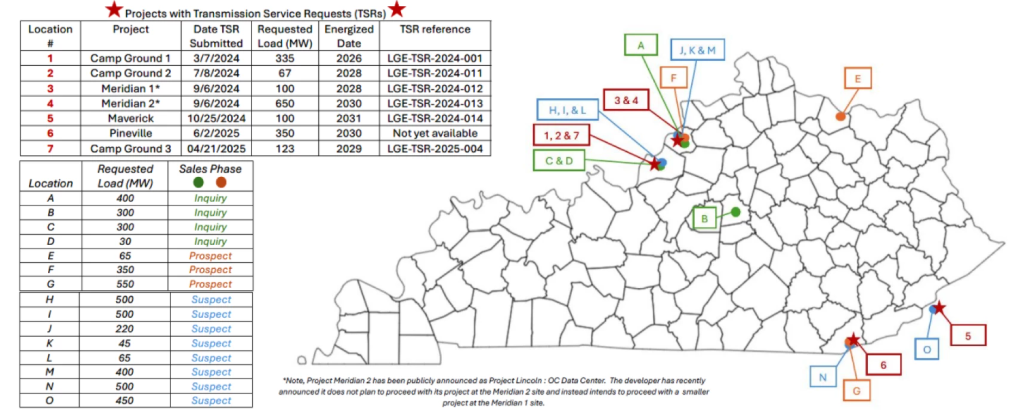
“So far in Kentucky we don’t have a significant amount of demand on the grid from data centers,” explained Byron Gary, Program Attorney at Kentucky Resources Council. “We have a few smaller operations, but nothing on the ‘hyperscale’ size seen in other places yet. If the growth projected by Louisville Gas & Electric Company (LG&E) and Kentucky Utilities (KU) does come about, though, we could see as much as a 20–30% increase in demand over the next 7–8 years. And this could have a real impact on costs for ratepayers.”
That kind of increase would require the utilities to make significant new investments in Kentucky’s energy infrastructure. How those costs are distributed will matter to everyone who uses electricity.
Utilities like LG&E and KU already received permission from state regulators to build two new gas power plants and make upgrades to existing coal units in anticipation of higher demand. They have said that data centers would pay their fair share, but Gary notes that cost allocation is not always clearly defined.
“The companies claim that the rates paid by data centers will fully cover the costs of all the needed infrastructure, but we have our doubts,” Gary said. “If the data centers don’t materialize, existing ratepayers could end up footing the bill. Even if they do, cost allocation in a utility setting is incredibly complex — and there’s significant room for debate over who’s really driving what costs. The immediate harm to residential customers, especially those already struggling with the costs of things like housing and groceries, could be very real and if electricity costs rise, Kentucky could lose the competitive edge that attracts real, job-creating industries.”
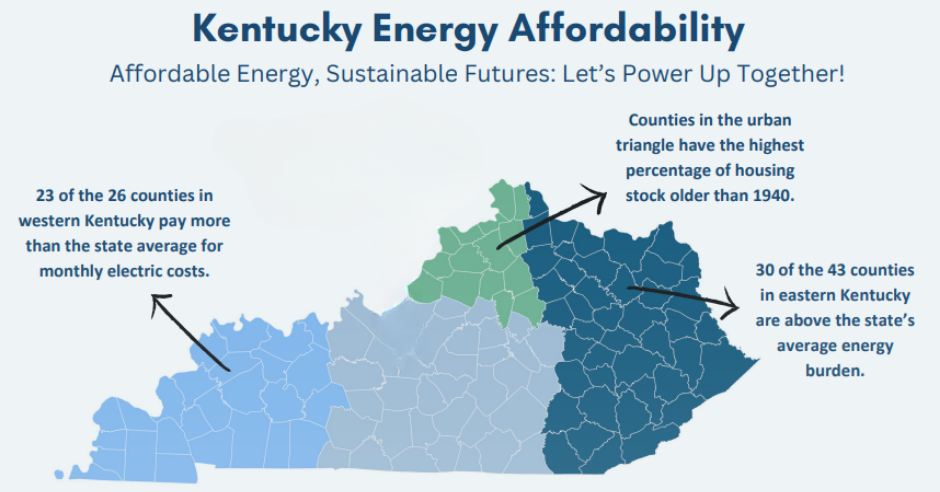
Higher energy costs don’t only affect households — they ripple through local economies, schools, and community institutions that depend on affordable electricity. In much of Kentucky, residents have limited opportunities to provide input on major industrial developments. Only about one-third of counties have planning and zoning ordinances, meaning that in many areas, projects like data centers can move forward with minimal public notice.
“It doesn’t help that many local officials negotiating with the developer have signed non-disclosure agreements preventing them from openly speaking with the community about the potential project as they should,” Gary said.
Beyond concerns about energy costs, data centers can be noisy and do not sustain many local jobs beyond construction. As data centers consider locating in Kentucky, it’s important that communities, regulators, and utilities work together to ensure that new development strengthens, rather than strains, the state’s energy system. Transparent decision-making, fair cost allocation, and thoughtful planning can help make sure that Kentucky remains an affordable and reliable place to live, work, and do business.
The Mountain Association and our partners regularly intervene in utility company proposals presented to the Kentucky Public Service Commission, our state regulators, in order to advocate for energy affordability in Eastern Kentucky.
To stay up to date with this work, please subscribe to our monthly newsletter.