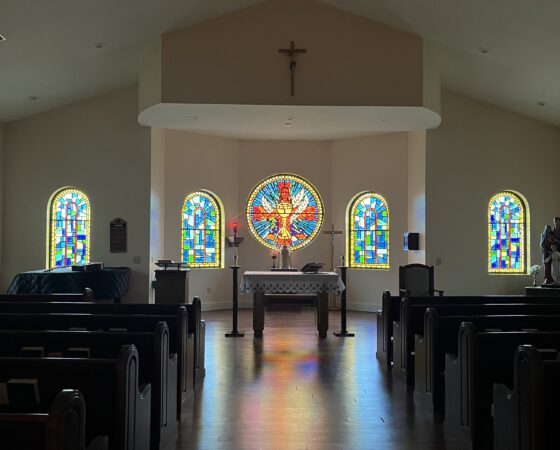
In Salyersville, Kentucky, St. Luke Catholic Church’s story is one of resilience. After a devastating tornado destroyed their original two-story building in 2012, the congregation rebuilt as a single-story church to make the space more accessible for everyone. That same spirit of thoughtful stewardship guides their work today. Recently, the church completed a series of energy-saving projects that are reducing costs and helping them continue serving Magoffin County families in need.
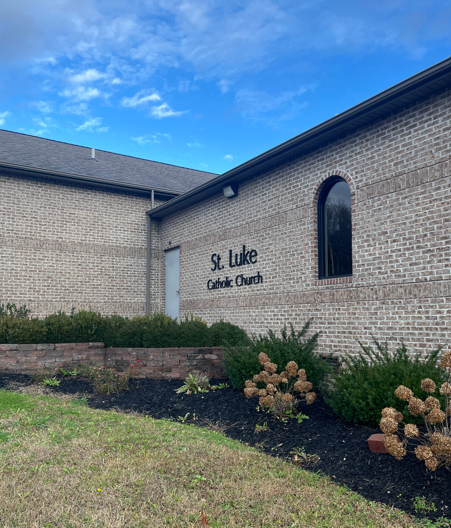
St. Luke serves around 90 families each month through its food pantry. This past Thanksgiving, they also partnered with a local homeless advocacy group to feed 275 people. Demand for their services has increased in recent years. For example, when supplemental SNAP benefits offered during COVID ended, the pantry had to double its food distribution.
And with so many ministries relying on the church’s facilities, energy use adds up quickly. The building’s six HVAC units keep the kitchen, pantry, and their Open Door Thrift Store running, alongside the sanctuary and other spaces, making efficiency improvements essential for both cost savings and community service – particularly in the winter.
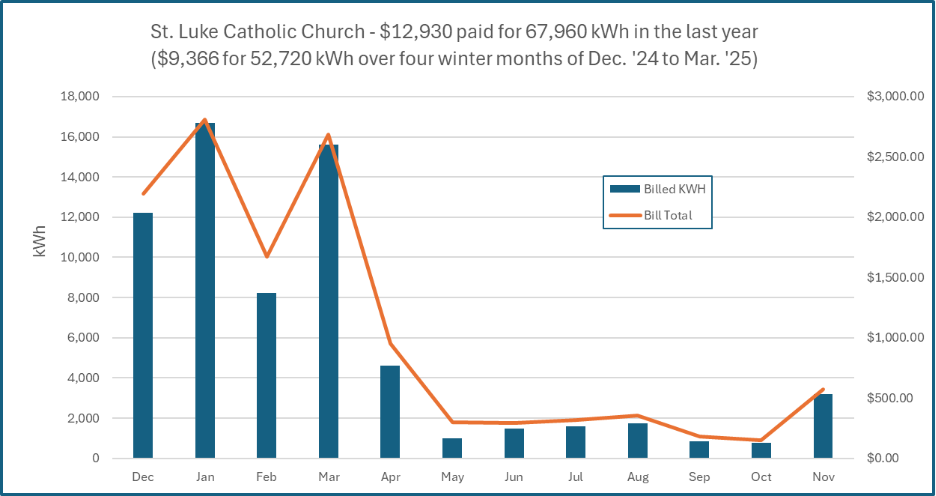
“Almost 80 percent of our energy is used from December through March,” Jerry Hardt, a church member and volunteer, explained. But Jerry also explained that changes aren’t just about saving money to do ministry work.
“Pope Francis emphasized how care of the earth is no different than care for each other.”
Pope Francis’ encyclical, the Laudato Si’ called on Catholic communities worldwide to care for creation. Encyclicals are the highest forms of the Pope’s teachings, which are circulated the world’s bishops or the entire Catholic community. In response, the Diocese of Lexington committed to achieving net-zero emissions across 50 counties by 2030, where the total amount of energy their buildings consume is equal or lower to the amount of renewable energy their buildings produce.
To assist with this bold goal, the Mountain Association Energy Team recently held a webinar in partnership with the Diocese and developed a guide for churches on how to save energy. We are also working with several Catholic churches in our service area as they establish their savings goals.
“St. Luke is leading the charge, having swiftly implemented the recommendations made by our team,” Josh Bills from the Mountain Association said. “We began with a billing review and then a full energy assessment and have been walking alongside the church from start to finish.”
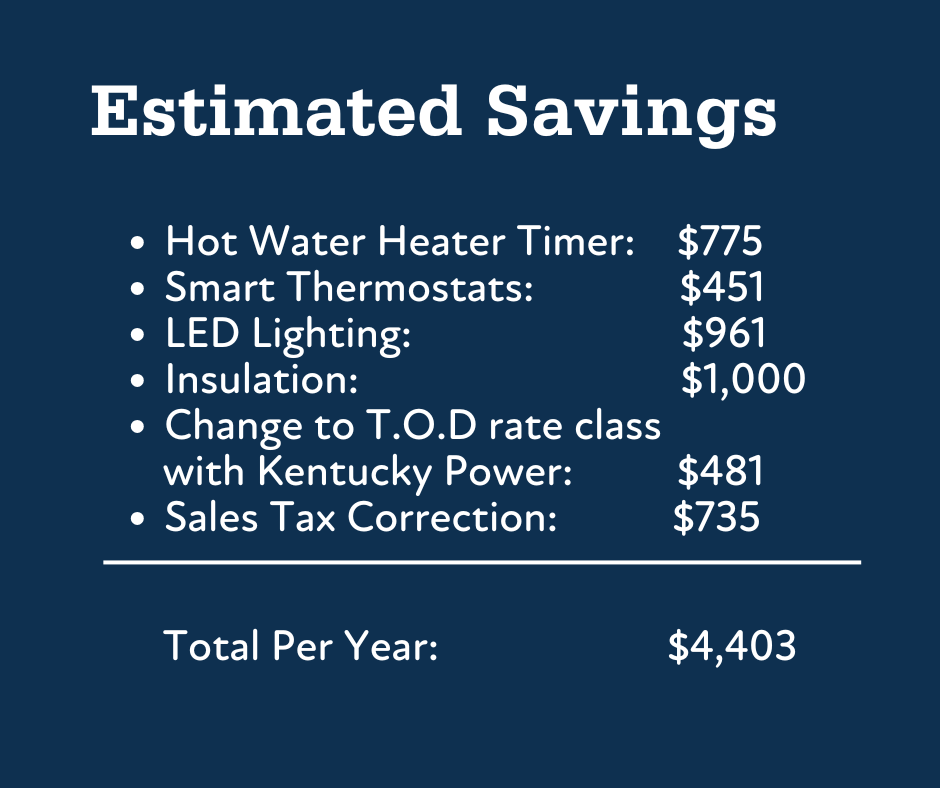
A review of bills identified the electric company erroneously charging St. Luke sales tax. One phone call to correct resulted in a $2,100 refund and an annual cost savings of $735 per year. Opting in to a Time-of-Day rate class with their utility opened more energy cost savings opportunities. One of the first energy cost savings improvements made was simple, but effective: installing a timer on the church’s hot water heater so it runs primarily during off-peak hours. This change alone is expected to save them $65 per month.
Next, Appalachian EnergyWorks installed smart thermostats so temperatures can be incrementally and remotely adjusted to save energy costs by preheating and cooling the building during morning off-peak hours. They also switched out 42 light fixtures to LEDs. When insulation work completed by another contractor ran into unexpected issues given the building’s unique roof system, our team stepped in to troubleshoot and ensure everything was installed correctly.
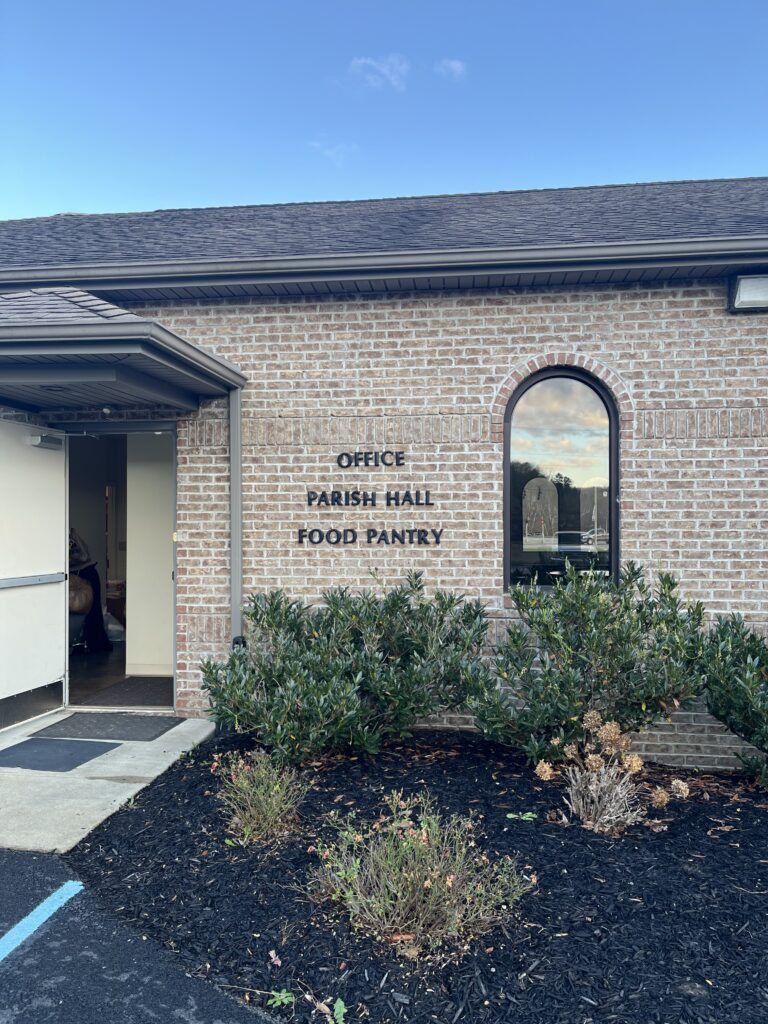
Now St. Luke is in conversation with the Diocese of Lexington about a solar installation, which will further shrink its energy use and allow the church to redirect those savings back into Magoffin County.
Through smart energy choices, the church is demonstrating Laudato Si’ in action and how stewardship of the earth only strengthens their ability to serve others.
Get a free energy assessment for your church here.