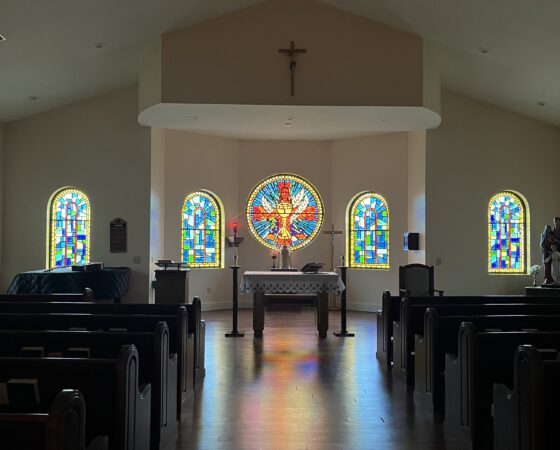
In the heart of Eastern Kentucky’s coalfields, a small church in Fleming-Neon has a long history of finding a way, even in hard times.
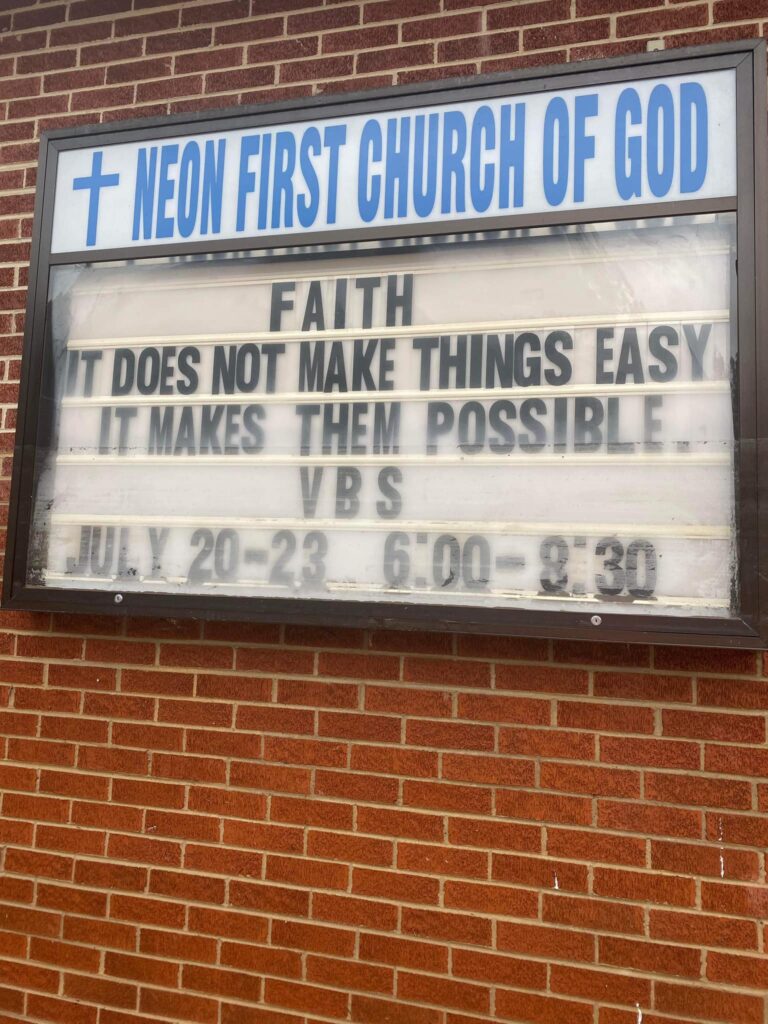
During the Great Depression, in 1938, a small group of community members in Neon heard about a church for sale in nearby Pike County. Piece by piece, they took down the building and were on their way back to Neon – until they ran out of gas. One of the men set out to find a gas station and on his way, he looked down to find a $10 bill on the ground.
“We always say that by Divine Providence, the church was delivered to Neon,” laughed Pastor Mark Wagoner.
Pastor Mark has been leading the congregation since 1988. He explained that Neon was once a thriving independent coal town, but it has been severely impacted by the decline of the industry. Many families have left and the economy has suffered. Then the devastating 2022 floods came and nearly decimated the town and surrounding communities. But through all this, the church has remained a beacon of hope and community service.
“After the flood, we weren’t sure if we’d even be able to rebuild,” Mark recalled.

The church faced $300,000 in damage. Despite their own recovery work, the church continued to serve its community, becoming an impromptu distribution center for supplies, serving flood survivors for over a year with the help of 1,000 volunteers from all over the country. And, with support from their church members and beyond, by Easter Sunday 2023, they were back in the sanctuary again.
With the restoration behind them, Mark and the board decided it was time to move forward with solar to give them some much-needed savings.
“I’ve always been intrigued by solar,” he said. “It just makes so much sense.” Mark has been interested in solar since others in Letcher County began to go solar around 2019, though the pandemic and catastrophic flood set them back on making the switch. When the Biden administration established the ‘direct pay’, which is essentially a way for nonprofits and faith institutions to tap into clean energy tax credits, the timing finally felt right – just like that $10 bill that got the church started all those years ago.
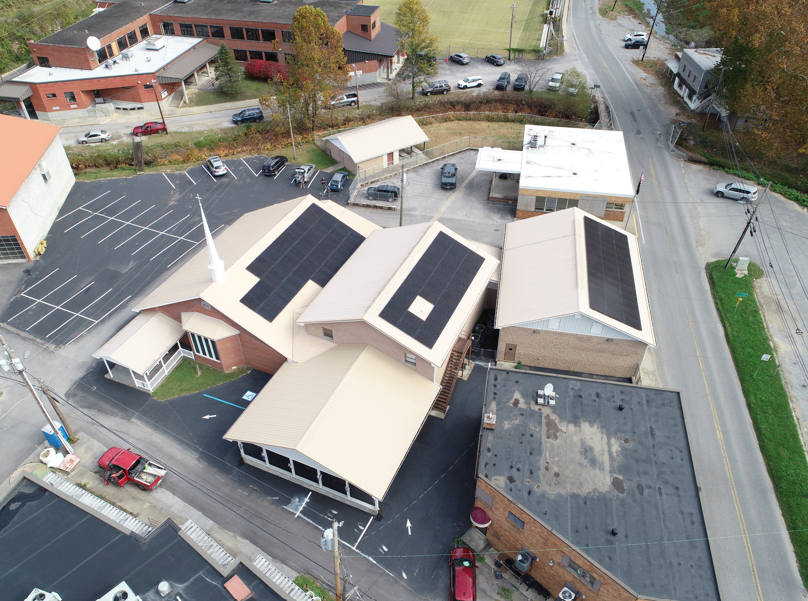
The project, installed by Solar Holler, came with a price tag of $145,000. But between Solar Renewable Energy Credits, a Solar Finance Fund grant, and a $50,000 IRS credit under the Inflation Reduction Act, the final cost totaled around $45,000. The Mountain Association financed the remaining amount with a 4% solar loan, making the transition both possible and practical.

Since then, the results have been stunning. From March through July, Mark said the church was essentially charged for zero kilowatt-hours, saving around $4,000 in just a few months, and banking credits with Kentucky Power to get them through the winter when less solar is generated.
“I get excited when I get the power bill now,” Mark said, “I always go run and find Lisa, my wife, to show her.”
In July, their two main buildings were billed just $76.10 – compared to $996 the year before. With six heat pumps across their fellowship hall and family life center, they need all the savings they can get, especially as power rates continue to increase every few years.
“Our budget is around $100,000, and our community isn’t growing. We’ve got to get creative. Solar gives us a cushion so we can continue to do ministry and serve others. That’s the reason we did this,” Mark described, referencing their partnership with the Letcher County food pantry and their work to support other communities impacted by natural disaster.
“And in 5, 10, 15 years, the impact will only grow. I don’t know how homes, businesses, and churches will make it without alternatives.”
The Mountain Association is proud to have supported this project with technical assistance and financing. The initial solar assessment completed by Mountain Association was funded with support from the Kentucky Office of Energy Policy. Thanks to OEP and our other funders, our energy savings assessments are free for any business, nonprofit or other institution in Appalachian Kentucky.