For six decades, the KCEOC Community Action Partnership has been at the forefront of fighting poverty in Eastern Kentucky. Originally founded in 1964 to serve Knox County, it was among the first 23 community action agencies established through President Lyndon B. Johnson’s War on Poverty. Today, KCEOC has programs spanning the Cumberland Valley Region, and stretches to parts of Western Kentucky as well.
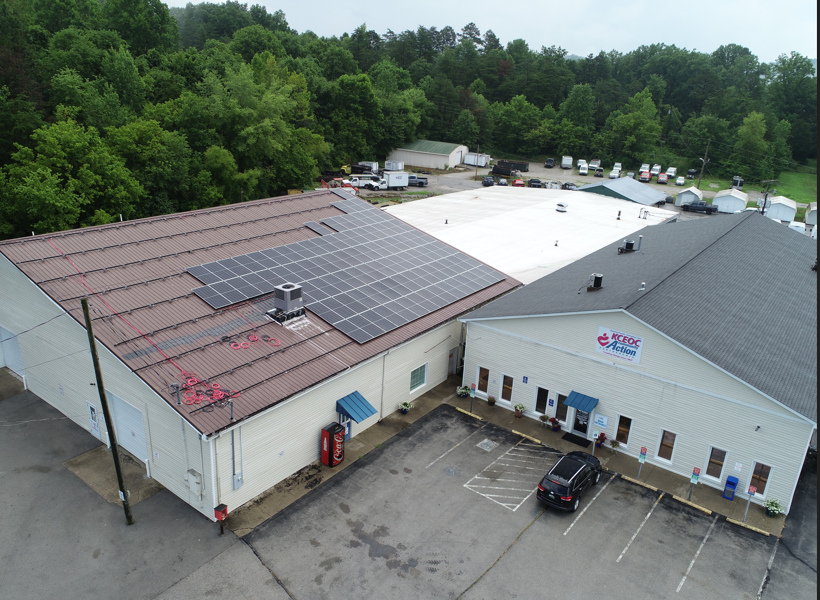
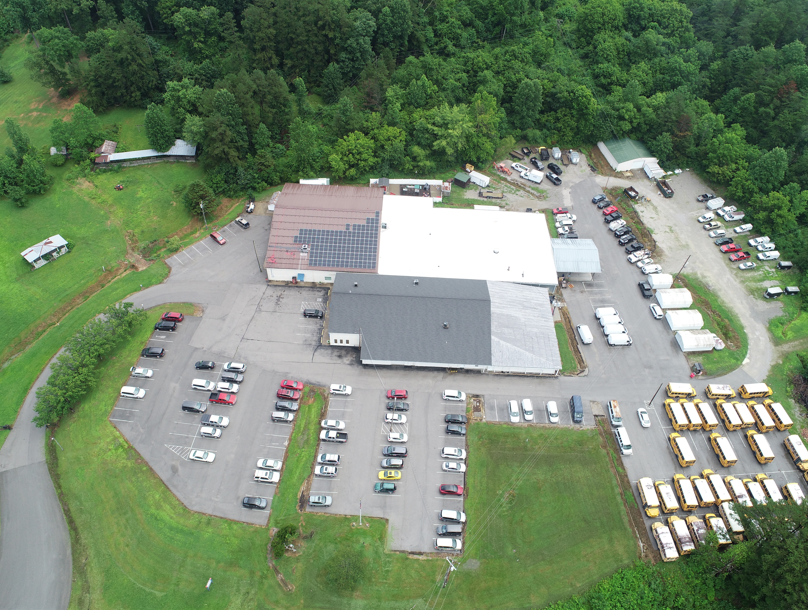
With a staff of nearly 400, KCEOC operates an extensive network of programs and services, making it one of the largest employers in the area. As of this summer, they have completed a solar project to benefit the Emergency Support Center that is attached to the main office building, which will see an estimated $10,000 in energy savings each year.
Located in Knox County, the KCEOC Emergency Support Center is a 23-bed facility serving multiple counties in the region. The ESC is a safe setting for adults and families experiencing homelessness to find relief and supportive services. The shelter’s design is thoughtful, focusing on the current safety needs of the residents while planning for their future success. The shelter offers private and secure entrances, an indoor playroom and outdoor playground for children, a community room, and a kitchen. Thanks to donations, clothing and hygiene supplies are also furnished to those in need.
“We want this to be a positive experience and for the facility to be nice as it can be for the people staying here,” said Shawn Bingham, KCEOC’s Community Services Director, who oversees the shelter along with several other critical programs. “The goal is to re-house shelter residents within three months, but also to help them with the skills and support to remain housed and employed permanently.”
Clients are assisted with obtaining permanent housing while getting back on their feet, boasting an impressive 90% success rate of people who have remained independently housed.
KCEOC also operates a separate shelter for youth ages 18-24 called Ryan’s Place Youth Crisis Center, which focuses on the unique needs of these young adults. Because of the housing crisis both facilities are almost always at full capacity, they also work with area hotels to temporarily house people in emergency situations as their funding allows.
By reducing utility costs, the solar upgrade will provide crucial breathing room in already constrained funding as KCEOC contends with potential cutbacks in federal funding. Because their campus is so large, they have multiple electric meters. With this in mind, Mountain Association staff offered a creative solar design that would allow the power to switch across two separate electric meters, allowing them to maximize the benefits of the solar panels while taking care of multiple power needs instead of a standard one-meter solar installation. This project, valued at $155,850, was largely paid for by grants, with the majority from The Nature Conservancy’s Cumberland Forest Community Fund, along with support from the Solar Finance Fund and Everybody Solar, and facilitated by the Mountain Association. The initial solar assessment completed by Mountain Association was funded with support from the Kentucky Office of Energy Policy.
KCEOC will recoup the remaining costs of the solar through something called elective pay, meaning they will be able to immediately reinvest all of the savings into the shelter and other impactful work they do across multiple counties—from weatherization and workforce development to Head Start and senior services. And though solar is new to them, KCEOC isn’t new to energy work.
“We have one of the best Weatherization Programs in the state,” said Paul D. Dole, KCEOC’s President/CEO.
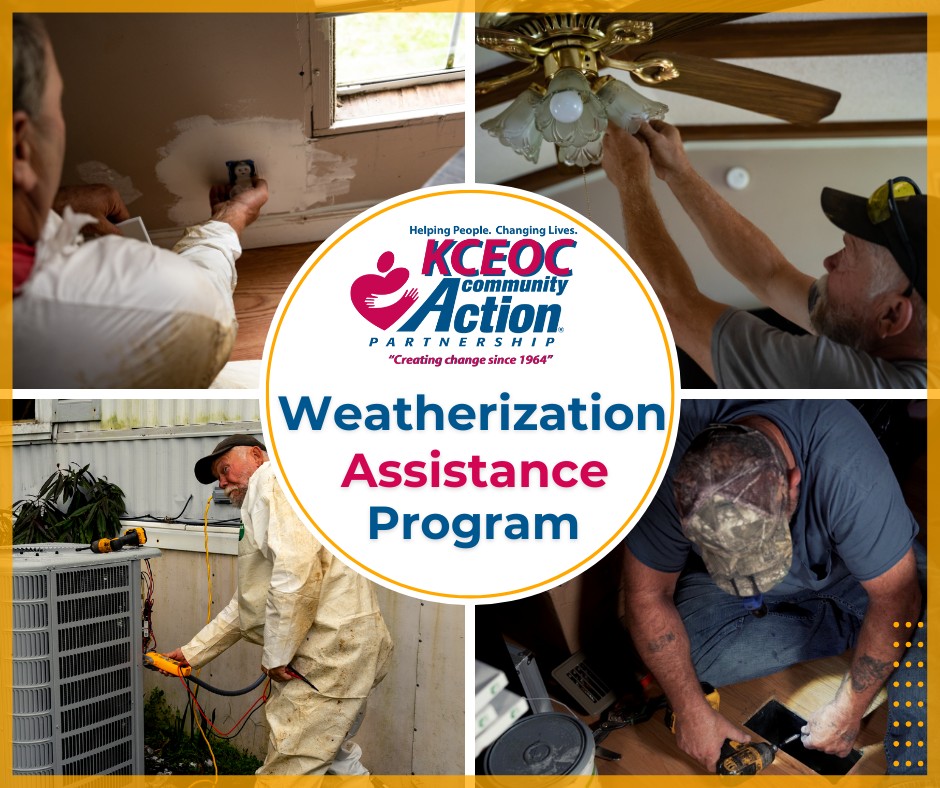
Weatherization crews work with homeowners and renters to make energy efficiency improvements to homes, like adding insulation, sealing gaps around doors, windows, pipes, and wiring to prevent drafts and moisture intrusion. This helps keep homes warmer in winter and cooler in summer at a lower cost, making it possible for the clients to afford critical items like food and medicine. Dole, who has been with KCEOC for 51 years, described how critical this work is in a region with housing that is aged and failing, especially as the Low Income Home Energy Assistance Program (LIHEAP), a program that helps people living in poverty with unaffordable energy costs could potentially be eliminated at the federal level.
“KCEOC’s efforts go beyond safety net programs, we are not in the hand out business, we are in the self sufficiency business. Our programs are designed to change lives and improve communities,” Dole further explained.
A clear example of how KCEOC responds to community needs is their recent technical school partnership. This project was spurred in 2019 when U.S. News & World Report labeled Knox County an “education desert” and the community echoed the need for a skilled workforce and local training, KCEOC got to work. After securing a partnership with Southeast Kentucky Community and Technical College, they brought the first technical and vocational campus to the area. With the help of grants, KCEOC completely renovated a former nursing home building that was donated to them by the Forcht Group, worth approximately $2 million dollars, into a state of art hands on training facility. The campus officially opened two years ago and offers 8- to 16-week training programs in fields like welding, plumbing, fiber optics, medical assisting, and other programs like EMT and nursing.
In a region facing significant economic challenges, KCEOC has continually brought new opportunities to the area. Now, with the new solar project, they are further ensuring the support systems they have developed over 60 years stay strong and grow so that Eastern Kentuckians who want a better life can always have somewhere to turn.
Grant Partnership
The solar panels were funded in part via the Cumberland Forest Project, an impact investment fund managed by The Nature Conservancy (TNC) that owns and operates over a quarter of a million acres in the Appalachian Mountains of Kentucky, Tennessee, and Virginia.
The surface and mineral estates on the 253,000-acre Cumberland Forest Project property are severed, with Cumberland Forest Limited Partnership owning and TNC managing the surface estate and separate entities owning the mineral estate. The mineral rights owner must pay royalties to the surface owner for any coal, oil or gas extraction. While there is little mining on the property, the Cumberland Forest Project reinvests 100 percent of the royalty payments it does receive into a Community Fund. In Kentucky, TNC has directed those funds to support solar installations on community buildings in the southeastern corner of the state via a partnership with Mountain Association.
“The Nature Conservancy is grateful for our continued partnership with Mountain Association on community solar projects like the one at KCEOC,” said Heather Jeffs, director of external affairs for The Nature Conservancy in Kentucky. “KCEOC provides essential services for Kentuckians in the region, and this solar project means less money spent on utility bills and more funding available for vital programs.”